The Chainsaw Carvers Log
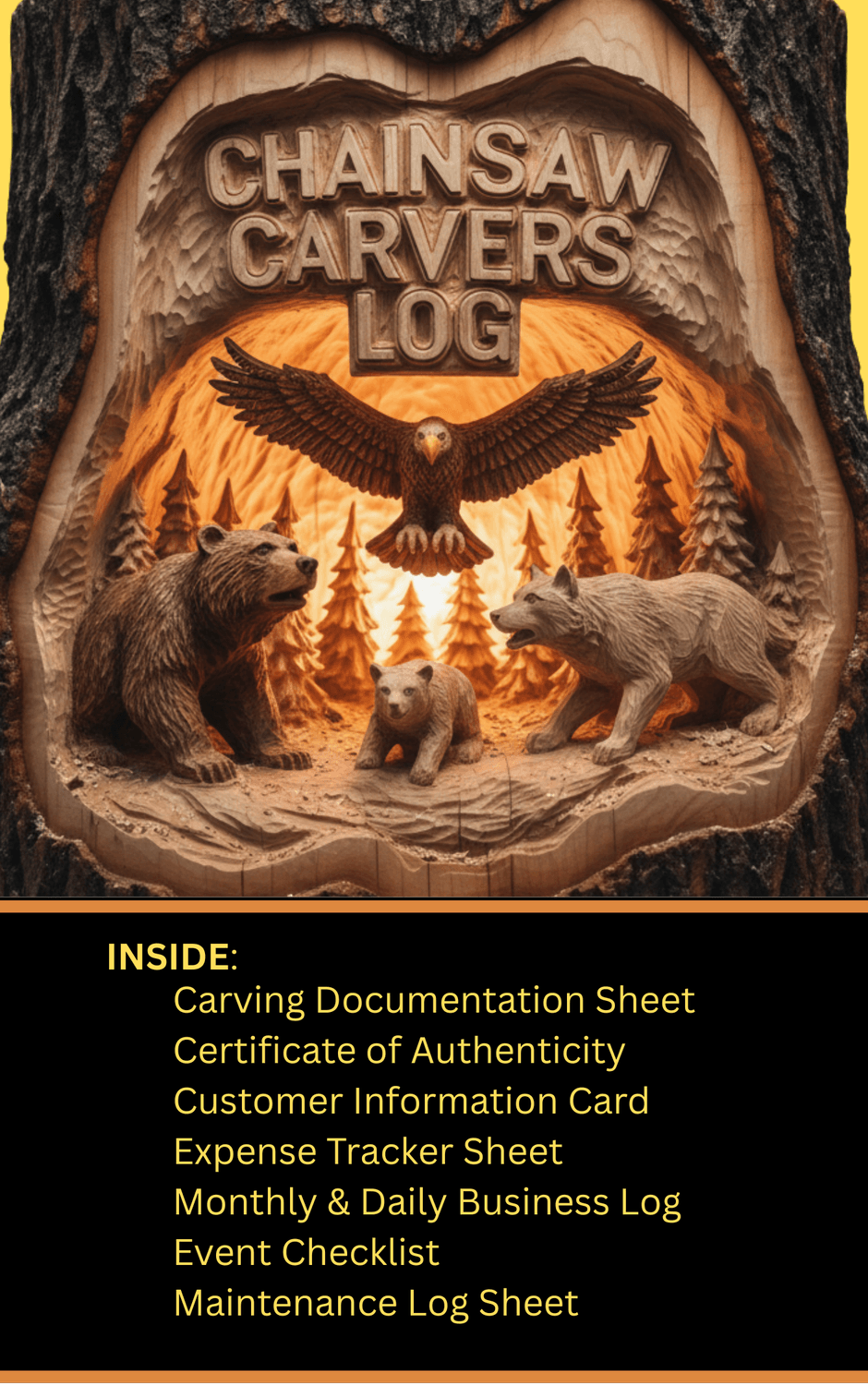
Here's a simple way to keep things organized - The Chainsaw Carvers Log! It's a collection of templates, for beginner and hobbyist chainsaw carvers - that want to kick it up a notch.
Get Your Copy of The Chainsaw Carvers Log
I do not give away or sell your information!
Here's what's inside:
Carving Documentation Sheet
Helps with tracking and learning
Certificate of Authenticity
Simple template to give buyers, includes your info, wood type, date, and care instructions
Customer Information Card
Use this to build long term business relationships
Expense Tracker Sheets
Monthly & Daily log for material costs, equipment maintenance, fuel, etc.
Event Checklist + Evaluation
Everything needed for craft fairs and exhibitions
Maintenance Log Sheet
Track chainsaw service, chain sharpening, bar maintenance
Yes, you can edit these. They come in PDF and Microsoft Word (.docx)
Yes, you can use them for your business. The templates are designed for the part-time vendor, and carver looking to go fulltime.
Yes, more are being added. I carve full-time, and this is my rainy day project. Some things take time.
But, if you have something to add, I'm open to suggestions.
A Simple Guide to Pricing Your Chainsaw Carvings
Figuring out what to charge for your carvings can be tough. This simple guide explains the two key numbers you need to know: your Minimum Viable Price (MVP) and your Recommended Market Price (RMP).
The Two-Step Pricing Method
Step 1: Find Your Base Cost (MVP)
This is your absolute lowest price. It covers your hard costs so you don’t lose money.
MVP Formula: (Your Hours × Hourly Rate) + Material Cost
Track All Your Time: Include design, rough carving, detail work, and finishing.
Set an Hourly Rate: Start at $20-35/hr for hobbyists, $35-50/hr for serious part-timers, and $50+/hr for professionals.
Add All Material Costs: Wood, chainsaw wear (add $5-20), finishes, and any hardware.
The MVP is your walk-away price. Selling for less means you're working for free.
Step 2: Find Your True Value (RMP)
This is your target selling price. It adds value for your skill and the carving's appeal.
RMP Formula: MVP × Value Multipliers
Use these multipliers based on your carving:
| Multiplier | Low (1x) | Medium (1.3x - 1.8x) | High (2x+) |
| :--- | :--- | :--- | :--- |
| Size | Small (<2 ft) | Medium (2-4 ft) | Large/Monumental (4+ ft) |
| Complexity | Simple shapes | Moderate detail (texture, features) | Intricate (portraits, multi-figure) |
| Your Skill | Novice (1-2 yrs) | Intermediate (3-5 yrs) | Advanced (5+ yrs) |
| Market Demand | Common item (generic bear) | Popular local item | Custom commission (pet, portrait) |
Finally, add 10-15% to the RMP to cover overhead like workspace, insurance, and marketing.
How to Use These Prices
Show Your Range: Quote prices as "$450 - $850" (MVP - RMP).
Start High: Begin negotiations at or near your RMP.
Know Your Floor: Never go below your MVP.
Quick Pricing Tips
Custom Work Costs More: Charge 25-50% extra for commissions.
Get a Deposit: Always take 30-50% upfront for custom orders.
Show Your Process: Photos and videos help customers see the value.
Raise Prices: If you sell everything quickly, your prices are too low.
Conclusion
Your work has real value. The MVP protects your costs, and the RMP reflects your skill and artistry. Use these prices to earn what you deserve and build a sustainable carving practice.
Remember: The market sets the price, but you decide what your time and art are worth.
Lorem ipsum dolor sit amet, consectetur adipisicing elit. Autem dolore, alias, numquam enim ab voluptate id quam harum ducimus cupiditate similique quisquam et deserunt, recusandae.